Chỉ đường
 Hotline: 0965969100
  info@dtptech.vn

Titanium Chemical Filter
Titanium Chemical Filter: A Technical Reference for Industrial Applications
This guide provides the technical depth needed to evaluate, specify, and maintain sintered titanium filter elements in corrosive chemical service including operating limits, chemical compatibility data, pore size selection criteria, and lifecycle cost benchmarks.
Nội dung bài viết
- What Is a Titanium Chemical Filter?
- Operating Parameters and Specifications
- Chemical Compatibility Reference
- Pore Size Selection Guide
- Material Comparison: Titanium vs. Alternatives
- Applications by Industry
- Cleaning and Maintenance Titanium Chemical Filter
- Life Cycle Cost Considerations Titanium Chemical Filter
- Pre-Selection Checklist Titanium Chemical Filter
- Frequently Asked Questions About Titanium Chemical Filter
- Does a Titanium Chemical Filter remove dissolved chemicals?
What Is a Titanium Chemical Filter?
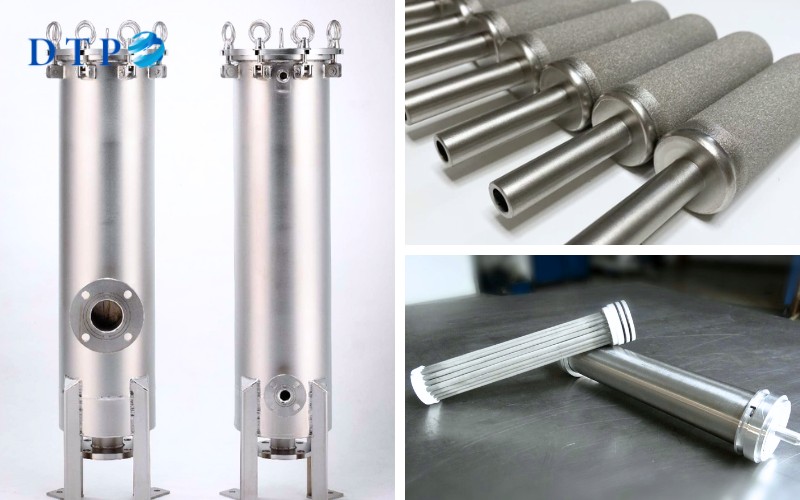
A Filter Chemical Titanium also referred to as a sintered titanium filter, titanium porous filter element, or titanium filter cartridge is an industrial filtration component manufactured by pressing and sintering high-purity titanium powder (typically Grade 1 or Grade 2, per ASTM B265/ASTM B348) at elevated temperatures. The sintering process fuses the powder particles at their contact points, forming a rigid, open-cell porous structure without binders or secondary materials.
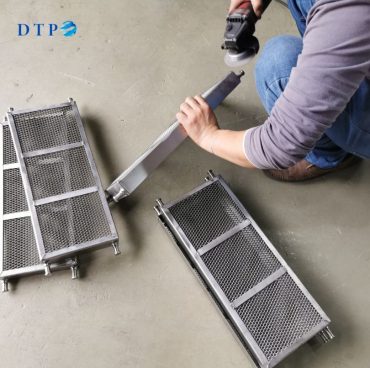
The resulting element offers a controlled pore morphology, stable dimensional integrity under thermal cycling, and the native corrosion resistance of titanium. Common form factors include tubular cartridges, flat disc elements, and plate-type elements. Typical wall thickness ranges from 3 mm to 10 mm depending on the pressure rating and pore size required.
Operating Parameters and Specifications
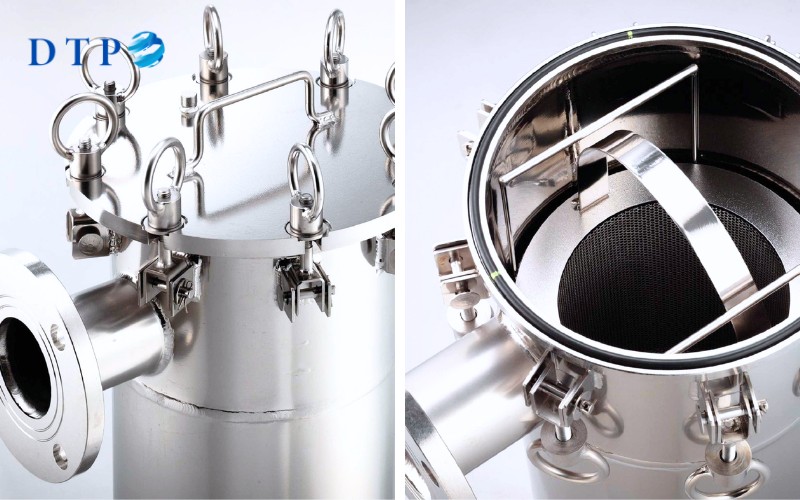
Actual operating limits vary by manufacturer and element geometry. The ranges below reflect typical commercial sintered titanium filter elements (Grade 1 / Grade 2 titanium) and should be confirmed against individual product datasheets before system design.
Typical Operating Envelope Sintered Titanium Filter Elements
Max. operating temperature
| Chemical | Concentration | Temperature | Compatibility | Notes |
| Sulfuric acid (H₂SO₄) | < 5 % | < 60 °C | Limited | Corrosion rate increases sharply above 5 % or 60 °C |
| Hydrochloric acid (HCl) | Dilute (< 1 %) | Ambient | Limited | Not recommended for sustained HCl service; consult corrosion data |
| Nitric acid (HNO₃) | Up to 65 % | < 100 °C | Good | Oxidizing; reinforces passive film. Avoid fuming / red fuming HNO₃ |
| Phosphoric acid (H₃PO₄) | Up to 85 % | < 80 °C | Good | Generally good; verify at elevated concentrations and temperatures |
| Hydrofluoric acid (HF) | Any | Any | Not compatible | HF rapidly attacks TiO₂ passive film; titanium is not suitable |
| Sodium hydroxide (NaOH) | Up to 50 % | < 80 °C | Good | Suitable in most alkaline process streams |
| Seawater / brine (NaCl) | Saturated | < 100 °C | Good | Excellent resistance; widely used in desalination and brine service |
| Chlorine gas (Cl₂), wet | Dilute | Ambient | Good | Wet chlorine is generally well handled; dry chlorine above 70 °C is not |
| Dry chlorine gas (Cl₂) | Any | > 70 °C | Not compatible | Risk of ignition; titanium must not be used in hot dry Cl₂ service |
| Acetic acid (CH₃COOH) | Up to 100 % | < 120 °C | Good | Used in pharmaceutical and chemical synthesis filtration |
| Methanol / ethanol | Any | < 80 °C | Good | Suitable for most solvent filtration applications |
| Hydrogen peroxide (H₂O₂) | Up to 30 % | < 60 °C | Good | Oxidizing environment; verify stability with H₂O₂ concentration |
| Ferric chloride (FeCl₃) | Any | Any | Not compatible | Aggressive pitting agent; can rapidly perforate titanium |
| Ozone (O₃) in water | Typical WTP dosing | < 40 °C | Good | Used post-ozonation in water treatment; oxidizing environment is beneficial |
280–350 °C
Max. operating pressure
0.6–1.0 MPa (87–145 psi)
pH range (aqueous service)
1 – 13
Available pore sizes
0.2 – 100 µm
Porosity (typical)
30 – 45 %
Titanium grade
Grade 1, Grade 2 (ASTM B265)
Design note: Pressure ratings above 0.6 MPa require validation of the specific element geometry and wall thickness. Thin-walled disc elements and large-diameter tubes typically carry lower pressure ratings than small-diameter tubular cartridges. Always confirm with the manufacturer’s test data for the exact element being specified.
Chemical Compatibility Reference
Titanium’s corrosion resistance derives from a passive TiO₂ oxide film that reforms rapidly in oxidizing or mildly reducing environments. However, this film can be disrupted under specific conditions. The table below summarizes compatibility for commonly encountered process chemicals. Ratings assume Grade 2 titanium at ambient to moderate temperatures; elevated temperature and concentration can shift ratings.
Critical limitation: The table above is a general reference. Corrosion behavior is sensitive to temperature, concentration, dissolved oxygen, flow velocity, and the presence of trace contaminants. For critical applications, corrosion coupon testing or manufacturer immersion test data specific to the process stream is strongly recommended before final selection.
Pore Size Selection Guide
Pore size (expressed as the nominal or absolute micron rating) is the most application-critical specification. Selecting too coarse a rating allows contaminants to pass; selecting too fine increases pressure drop and reduces flow rate for a given element area. The following guidelines cover common use cases:
| Pore Size (µm) | Filtration Class | Typical Applications |
| 0.2 – 1 | Microfiltration / sterilizing | Sterile filtration in pharmaceutical, bacteria removal, fine chemical polishing |
| 1 – 5 | Fine filtration | Catalyst removal, ultrapure water pre-filter, plating bath polishing, pharmaceutical intermediate filtration |
| 5 – 20 | General process filtration | Chemical process streams, electroplating bath clarification, water treatment post-ozonation, solvent clarification |
| 20 – 50 | Coarse / protective filtration | Pre-filtration before fine elements, pipeline strainer duty, petrochemical guard filters |
| 50 – 100 | Strainer duty | Protection of pumps, control valves, and instrumentation; removal of large particulates in aggressive streams |
Sizing tip: Pressure drop across a clean filter element is typically 0.01–0.05 MPa at design flow rate for mid-range pore sizes (5–20 µm). When system pressure budget is limited, confirm expected clean ΔP with the manufacturer at the design flow velocity (m/h or L/min/cm²) and plan for an operational ΔP alarm setpoint at 1.5–2× the clean value to trigger a cleaning cycle.
Material Comparison: Titanium vs. Alternatives
No single material dominates all corrosive service. The table below compares sintered titanium against the most common alternatives to help engineers make an informed material selection decision.
| Property | Titanium (Gr. 2) | 316L Stainless Steel | Hastelloy C-276 | PTFE / Polymer | Ceramic (Al₂O₃) |
| Oxidizing acids | Excellent | Fair | Excellent | Good | Good |
| Reducing acids (HCl, H₂SO₄) | Limited | Poor | Excellent | Good | Good |
| Chloride environments | Excellent | Poor (pitting) | Excellent | Good | Good |
| Max. temperature (structural) | ~350 °C | ~400 °C | ~400 °C | ~260 °C (PTFE) | >600 °C |
| Mechanical strength | High | High | High | Low | Brittle |
| Backwash / reuse | Yes | Yes | Yes | Limited | Yes (fragile) |
| Relative material cost | High | Low–Medium | Very High | Low | Medium |
| Best fit | Chloride-rich, oxidizing, or mixed-service corrosive streams | Mild to moderate non-chloride aqueous service | Severe mixed-acid or reducing acid service | Low pressure, low temperature corrosive duty | Very high temperature, non-impact service |
Applications by Industry
Chemical and Petrochemical Processing
Titanium filters are used for filtering corrosive process liquids dilute acids, caustic streams, and mixed solvents where stainless steel would be subject to chloride-induced pitting or general corrosion. Typical service includes intermediate product polishing, catalyst fines removal, and column feed protection.
Electroplating and Surface Treatment
Plating baths containing chromic acid, nickel sulfamate, and chloride-based electrolytes are highly corrosive to most metals. Titanium sintered elements operating in the 5–20 µm range are the standard choice for continuous bath filtration, where they remove particulate drag-out and anode sludge without contributing metallic contamination to the bath chemistry.
Pharmaceutical and Fine Chemicals
Sintered titanium filters in the 1–5 µm range are used for polishing filtration of APIs and intermediates in organic solvents, dilute acid streams, and mild alkaline media. Because titanium does not leach significant metallic ions into process fluids under normal operating conditions (unlike iron alloys), it is acceptable in many pharmaceutical material contact applications though formal extractables/leachables studies may be required under GMP frameworks depending on jurisdiction and product type.
Water Treatment
Post-ozonation and post-UV filtration in municipal and industrial water treatment plants are a growing application area. Ozone-rich streams are highly oxidizing and degrade many polymer elements; titanium is unaffected. Pore sizes of 5–20 µm are typical for this service.
Gas Filtration
For corrosive gas streams (wet chlorine, acid mists, hydrogen sulfide scrubber offgas), titanium elements operating at elevated temperature provide stable mechanical structure and chemical resistance that polymer or metal-fiber elements cannot match.
Cleaning and Maintenance Titanium Chemical Filter
One of the principal advantages of sintered titanium elements over polymer cartridges is restorability. The following cleaning methods are applicable, in order of increasing aggressiveness:
- Backwash (reverse flow): Effective for loosely deposited particulates. Recommended as a first-line procedure before chemical cleaning. Flow rate should be 1.5–2× forward flow rate. Typical backwash interval: every 8–24 hours depending on solids loading.
- Ultrasonic cleaning: For cake-type deposits that backwashing cannot dislodge. Remove the element, immerse in compatible solvent or dilute acid, and apply ultrasonic energy (20–40 kHz, 15–30 minutes). Rinse thoroughly before reinstallation.
- Chemical cleaning (acid wash): For inorganic scale, metal oxide deposits, or biofilm. A 5–10 % nitric acid solution (compatible with titanium see Section 3) is the standard stripping agent. Soak time 30–60 minutes at ambient temperature, followed by thorough water rinse. Do not use HF-containing cleaners on titanium elements.
- Oxidative cleaning: Hydrogen peroxide solution (3–10 %) can be effective for organic fouling. Verify compatibility with your specific process deposit.
Service life indicator: Establish a baseline clean-element pressure drop (ΔP) at commissioning. If ΔP after a full cleaning cycle returns to >150 % of the original clean baseline, the element is likely permanently fouled or structurally compromised and should be replaced. Most sintered titanium elements achieve 3–7 years of service life in appropriate applications with proper cleaning protocols.
Life Cycle Cost Considerations Titanium Chemical Filter
Initial capital cost for sintered titanium elements is significantly higher than equivalent-rated polymer cartridge or pleated stainless mesh elements. However, the relevant comparison for industrial applications is total cost of ownership (TCO) over the equipment’s operating life.
The key economic drivers that favor titanium in corrosive service are:
- Extended element life: A titanium element that survives 5 years replaces 20–60 single-use polymer cartridges of equivalent flow rating, eliminating both material cost and change-out labor.
- Reduced unplanned downtime: Polymer elements that corrode or swell in aggressive service cause process upsets. Titanium provides predictable performance under defined operating conditions.
- Lower waste disposal burden: Spent polymer cartridges contaminated with corrosive or hazardous process fluids may require special disposal. Titanium elements can typically be stripped, cleaned, and at end of true service life recycled as scrap metal.
As a rough benchmark: in continuous chemical service with a cleaning interval of 24–72 hours, a titanium element paying back its capital premium over 316L stainless at the 18–36 month mark is typical, assuming the stainless element requires replacement every 3–6 months due to corrosion. Actual payback depends strongly on element size, process chemistry, and site labor rates.
Pre-Selection Checklist Titanium Chemical Filter
Before submitting a specification or purchase inquiry, confirm the following information is available. Suppliers cannot reliably recommend a product without these parameters.
| Parameter | Why It Matters |
| Chemical identity and concentration | Determines material compatibility and whether titanium is appropriate |
| Operating temperature (min / max) | Affects corrosion rate and pressure rating |
| Operating pressure (differential and maximum) | Determines minimum wall thickness and geometry |
| Flow rate (and acceptable ΔP) | Determines required filter area and element count |
| Target particle size and removal efficiency | Determines pore size rating (absolute or nominal) |
| Solids loading (mg/L or g/m³) | Determines cleaning frequency and housing sizing |
| Connection standard and housing design | Element must be compatible with housing end fittings and seals |
| Seal material compatibility | O-ring or gasket materials must also resist the process chemical |
| Regulatory or material certification requirements | Some applications require FDA, USP, or CE-documented material traceability |
| Cleaning method available on site | Influences whether in-situ backwash or offline cleaning is practical |
Data ranges in this article reflect typical commercial sintered titanium filter products. Individual products vary; always verify operating limits, compatibility, and certification requirements against the manufacturer’s specific product documentation before final specification. This article does not constitute engineering design advice for any specific installation.
Frequently Asked Questions About Titanium Chemical Filter
Does a Titanium Chemical Filter remove dissolved chemicals?
No. It mainly removes suspended particles, solids, catalyst fines, sludge, and physical impurities. It does not remove dissolved salts, ions, or dissolved chemicals.
Can a Titanium Chemical Filter replace activated carbon?
No. Titanium filters are used for mechanical filtration, while activated carbon is used for adsorption, odor removal, and some organic compound reduction.
Is a Titanium Chemical Filter suitable for high-viscosity liquids?
Yes, but the filter area, pore size, pressure drop, and flow rate must be carefully checked. High-viscosity liquids usually need a larger filter area or a coarser pore size.
Can titanium filter elements be customized?
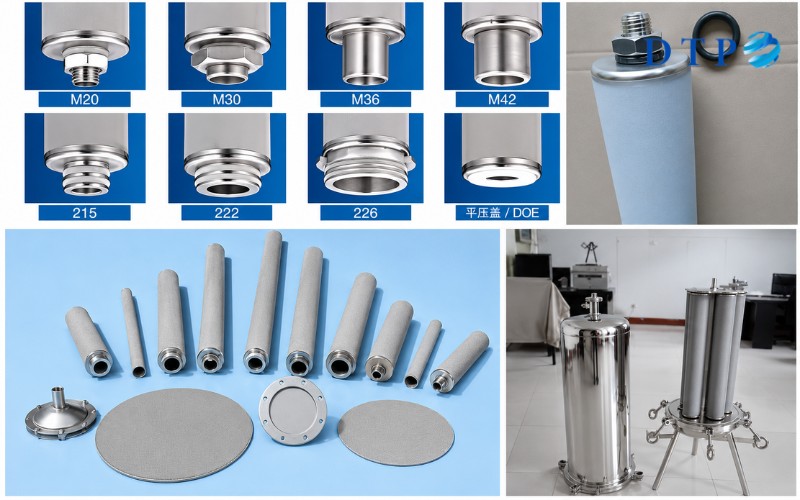
Yes. They can often be made in different shapes, lengths, diameters, pore sizes, and connection types based on system requirements.
Does smaller pore size always mean better filtration?
Not always. A smaller pore size gives finer filtration, but it can also reduce flow rate and increase pressure drop. The best pore size depends on the actual process.
Can a Titanium Chemical Filter be used as a final sterile filter?
Only if it is properly validated for that purpose. For pharmaceutical or sterile applications, filtration performance must meet required industry standards.
Does the filter housing also need to be titanium?
Not always. The housing material should match the chemical environment. In highly corrosive systems, titanium housing may be needed for full protection.
Are the seals and gaskets important?
Yes. Even if the titanium element is compatible, the O-ring or gasket may fail if the seal material is not suitable for the chemical.
Can Titanium Chemical Filters be used in continuous production?
Yes. They are suitable for continuous industrial filtration when the filter size, cleaning cycle, and pressure limits are correctly designed.
How do I know if the filter is blocked?
A blocked filter usually causes higher pressure drop, lower flow rate, or unstable system performance. Regular pressure monitoring is recommended.
Can the filter remove bacteria?
It may remove bacteria if the pore size is fine enough, but bacterial removal must be verified by testing. Do not assume sterilizing performance without validation.
Is titanium always better than stainless steel?
No. Titanium is better in many corrosive environments, especially chloride-rich conditions, but stainless steel may still be enough for mild and less corrosive applications.
Can the filter be cleaned without removing it?
In some systems, yes. If the housing supports backwashing or in-place cleaning, the filter may be cleaned without full removal.
What information should be provided before ordering?
You should provide the chemical name, concentration, temperature, pressure, flow rate, target particle size, connection type, and cleaning method.
Is a Titanium Chemical Filter expensive?
The initial cost is usually higher than common filter materials, but it can be more economical in harsh chemical systems because it is durable, reusable, and has a longer service life.
The right Titanium Chemical Filter depends on each industry’s process, chemical type, flow rate, temperature, pressure, and filtration accuracy. Choosing the proper filter helps improve performance, protect equipment, and reduce downtime. Contact DTP Technology to choose the right Titanium Chemical Filter for your system.
Hotline/Zalo: 0938 266 100 – 0965 969 100
DTP TECH ENGINEERING TECHNOLOGY JOINT STOCK COMPANY
Address: 759/7A Huong Lo 2, Quarter 2, Binh Tri Dong Ward, Ho Chi Minh City, Vietnam
Website: dtptech.vn
Email: info@dtptech.vn
Share: